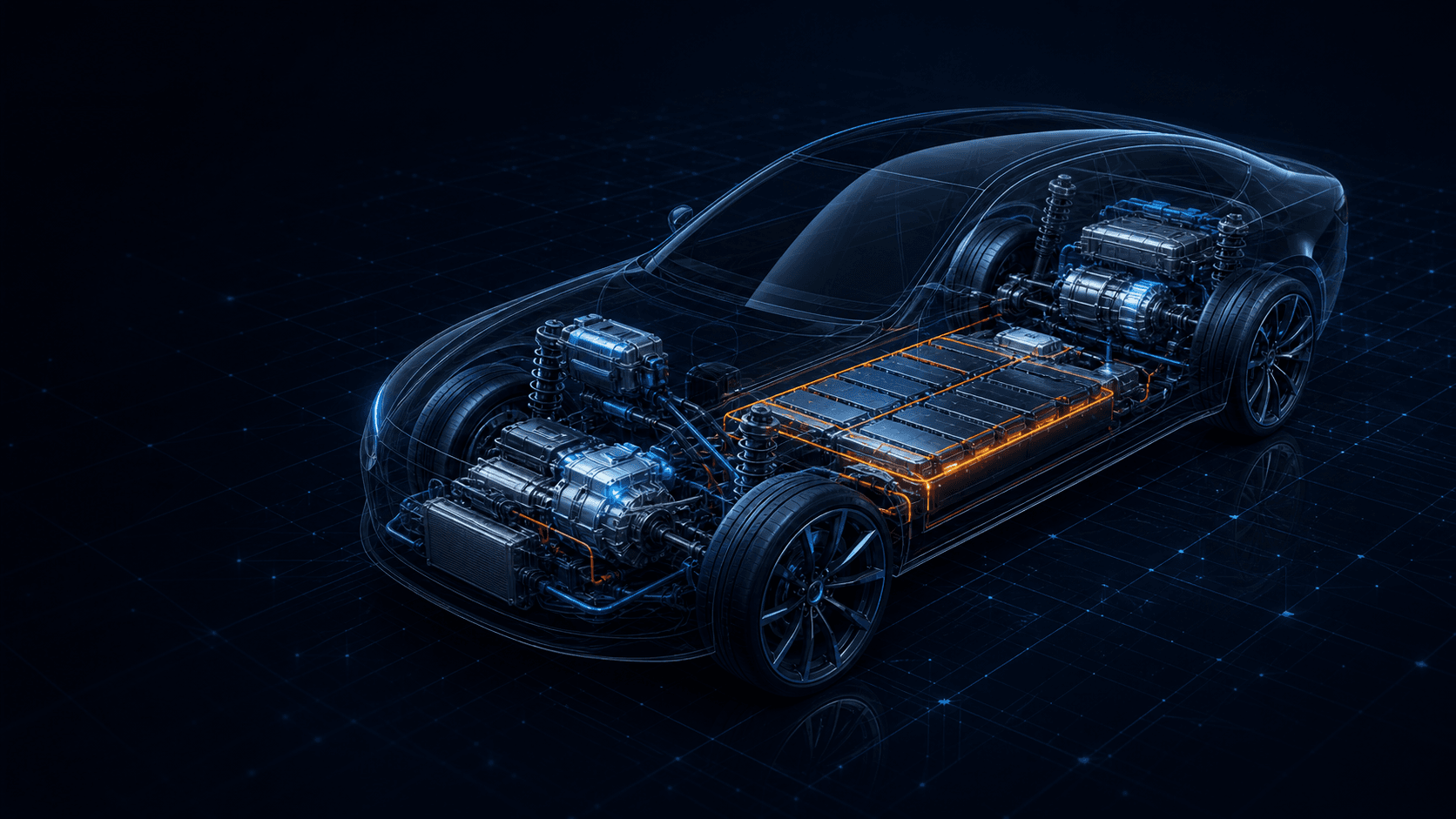
The world is moving fast toward electrification. Battery costs are falling, charging networks are expanding, and consumer awareness is rising. It’s easy to think that the future is purely electric.
But the reality is more nuanced. For many years to come, hybrid powertrains will play a critical role in delivering cleaner, more efficient mobility—especially in regions and segments where full electrification is not yet practical.
01. The Transition Is Not Instant
Electrification is a multi-decade journey, not an overnight switch. The global vehicle fleet exceeds 1.4 billion units, and the average vehicle stays on the road for more than 15 years.
Infrastructure, raw materials, manufacturing capacity, and policy frameworks all need time to catch up. During this transition, hybrids offer a pragmatic solution.
02. Why Hybrids Are Still Relevant
Energy Efficiency
Hybrids combine the strengths of internal combustion engines and electric motors. Through regenerative braking and intelligent energy management, they can achieve substantially better fuel economy.
Infrastructure Reality
Large parts of the world still lack reliable charging infrastructure. Hybrids reduce range anxiety while maintaining lower emissions.
Versatility Across Markets
From compact city cars to heavy-duty trucks, hybrids can be adapted across a wide range of applications and markets.
03. Types of Hybrid Powertrains
Series, parallel, and power-split architectures each make different tradeoffs between efficiency, complexity, cost, and drivability.
04. The Road Forward
The strongest near-term strategy is not choosing one technology for every use case, but matching powertrain architecture to infrastructure, duty cycle, and user needs.
Hybrids are not a replacement for full electrification—they are a strategic bridge that balances efficiency, affordability, and real-world readiness.
This entry reflects an ongoing learning process. Models and claims should be checked against their assumptions and primary sources.